Deploy Ghostfolio
Self-hosted Ghostfolio: track stocks, ETFs and crypto wealth
ghostfolio
Just deployed
postgres
Just deployed
/var/lib/postgresql/data
Just deployed
/data

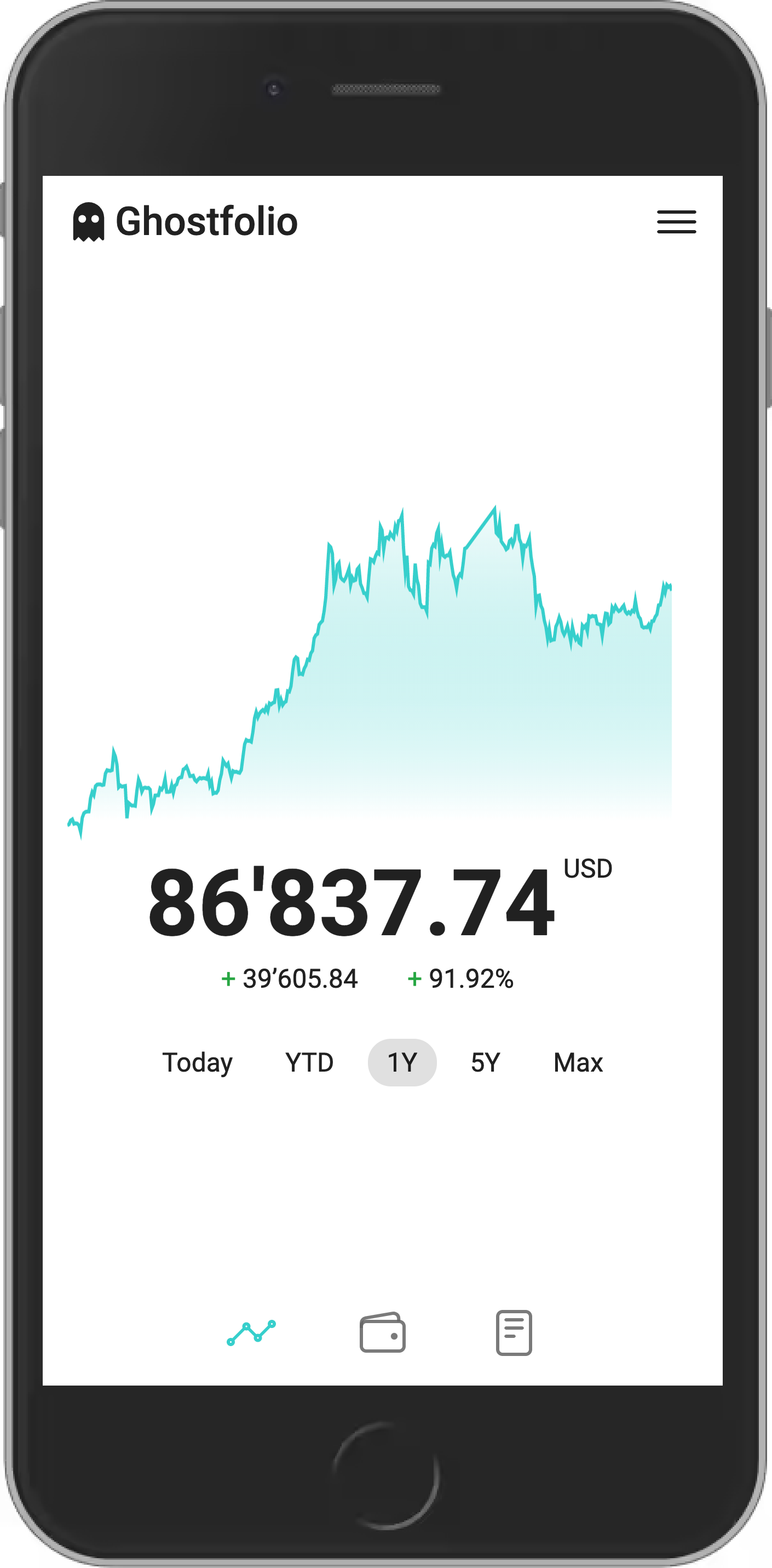
Screenshot: upstream's own dashboard screenshot (ghostfolio/ghostfolio, AGPL-3.0), showing the portfolio overview with holdings and performance.
Deploy and Host
Ghostfolio is an open-source wealth management platform for tracking stocks, ETFs, cryptocurrencies, bonds, and cash across every broker and exchange in one private dashboard — net worth, performance attribution, dividends, and risk, with your transaction history staying in your own database. With 50,000+ stars and a release cadence of several versions a month, it is the maintained, self-hosted alternative to Sharesight and Mint.
What gets deployed:
- ghostfolio — Angular client + NestJS API in one container (port 3333); runs Prisma migrations on every boot
- postgres — PostgreSQL 16 companion, data on a Railway volume
- redis — Redis 8 companion, response cache + BullMQ job queues for market-data refreshes
The deploy form has two generated fields — an access-token salt and a JWT secret — and nothing else to fill in. On first visit, click Get Started, save the one-time security token, and you are the admin; close public sign-ups afterwards in Settings → Self-Hosting.
About Hosting
Three services from the official image (ghostfolio/ghostfolio v3.100.0, pinned by digest, AGPL-3.0). Railway's injected PORT is honored natively — the app binds 0.0.0.0:$PORT on every boot. The public URL is derived from the live domain at boot, and the healthcheck is /api/v1/health (unauthenticated, 200 when Postgres and Redis are both healthy). All persistent state lives in Postgres; the app service is stateless, so holdings, accounts, and transactions survive redeploys.
Why Deploy
- Zero-fuss start: no setup wizard, no email step — one click, one token, you are the admin.
- Real portfolio tracking: accounts, activities, dividends, liabilities, budgets, and a full REST API, with prices from Yahoo Finance by default — no API key needed.
- Always-on by design: the app, Postgres, and Redis run continuously, so scheduled price refreshes and snapshots happen without a second deploy.
- Private by default: holdings never leave infrastructure you control; Ghostfolio only fetches public market data and never moves money or touches broker credentials.
Common Use Cases
- Replace Sharesight, Mint, or a spreadsheet with a private net-worth dashboard across brokers, banks, and wallets.
- Track dividends, fees, and performance per account, asset, and tag — and export everything as CSV or JSON.
- Feed a budgeting app or a personal dashboard from Ghostfolio's full REST API.
- Watch a watchlist of symbols with daily price history, without handing holdings to a third-party tracker.
Dependencies for
Everything this template provisions, and how each piece is configured:
Deployment Dependencies
| Setting | Value |
|---|---|
| Runtime | Ghostfolio v3.100.0 (Node 22, NestJS + Angular) + PostgreSQL 16 + Redis 8 |
| Plan | Hobby; three services |
| Port | Railway's injected PORT, honored natively on every boot (default 3333) |
| Persistence | One Railway volume at /var/lib/postgresql/data (Postgres data); one at /data (Redis append-only file); app service stateless |
| Healthcheck | /api/v1/health (unauthenticated, 200); the app is ready when Postgres and Redis both answer |
| Variable | Value | Notes |
|---|---|---|
ACCESS_TOKEN_SALT, JWT_SECRET_KEY | ${{secret(32)}} each | Generated on the deploy form; both must stay stable across redeploys. |
POSTGRES_* | user/db ghostfolio, password generated | Auto-wired: POSTGRES_HOST is ${{postgres.RAILWAY_PRIVATE_DOMAIN}}, password is ${{postgres.POSTGRES_PASSWORD}}; DATABASE_URL is composed at boot from them. |
REDIS_* | host auto-wired, port 6379 | REDIS_HOST is ${{redis.RAILWAY_PRIVATE_DOMAIN}}; no password (private network only, same as upstream's compose). |
API_KEY_COINGECKO_DEMO | (empty, optional) | Optional CoinGecko demo key; lifts the 365-day crypto history limit. |
Baked or derived internals: TRUST_PROXY=true, HOST=0.0.0.0, ROOT_URL derived at boot from the live public domain. Other upstream variables (CoinGecko Pro, Alpha Vantage, EODHD, OIDC) can be added after deploy — see the upstream self-hosting docs.
Template Content