Deploy Sillytavern
Chat and roleplay with AI characters using your own API key
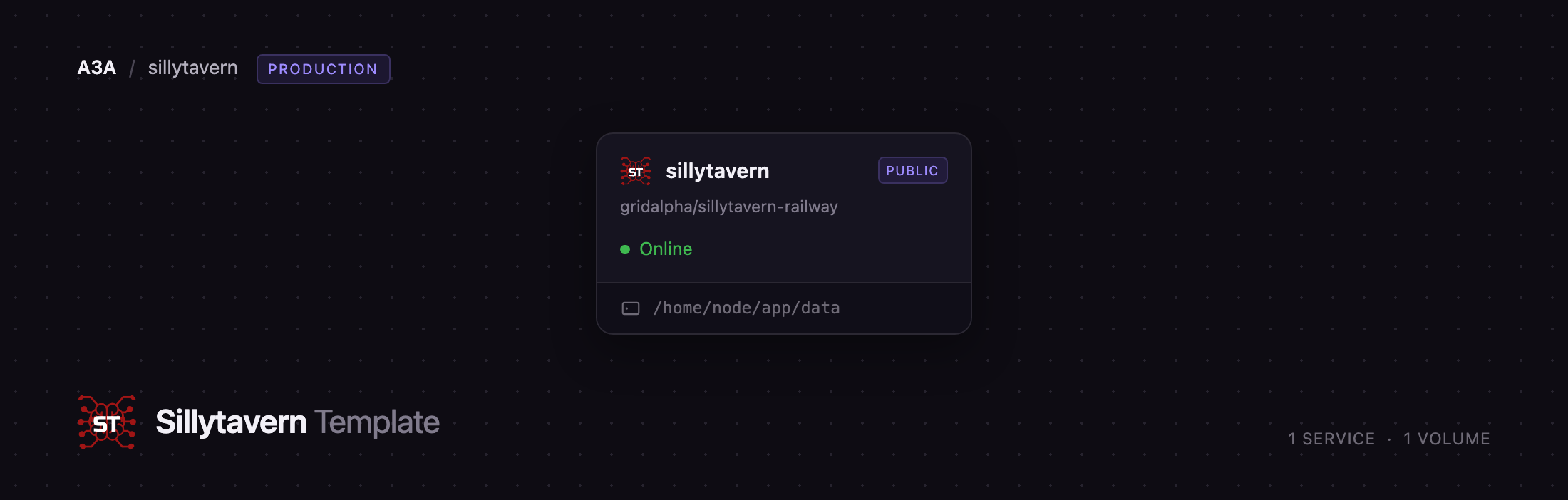
sillytavern
Just deployed
/home/node/app/data
Deploy and Host SillyTavern on Railway
SillyTavern is an open-source frontend for large language models, built for people who want control over the conversation rather than a chat box. Characters are portable character cards, lore lives in World Info entries, several characters can share a group chat, and the sampler, prompt template and context budget are editable. It ships no model of its own — connect OpenAI, Anthropic, OpenRouter, NovelAI, AI Horde or your own Ollama server — so chats, prompts and API keys stay on infrastructure you control.
Deploy SillyTavern on Railway and the awkward part is already done. Running it publicly means putting a login in front of it, and SillyTavern's own startup check refuses to serve a non-loopback address while an admin account has a blank password. This template builds from gridalpha/sillytavern-railway on top of the official ghcr.io/sillytavern/sillytavern image and sets that password before the server starts, from one variable you pick at deploy time. One service, one volume, HTTPS and a domain — no compose file, no reverse proxy.
Getting Started with SillyTavern on Railway
Set ST_ADMIN_PASSWORD at deploy time, or accept the generated one and copy it from the Variables tab. Open the public URL and you land on a login screen showing one account, default-user — click it, enter that password, and you are in. Nobody else can sign up: there is no registration route, and accounts are made by an admin under Account Management.
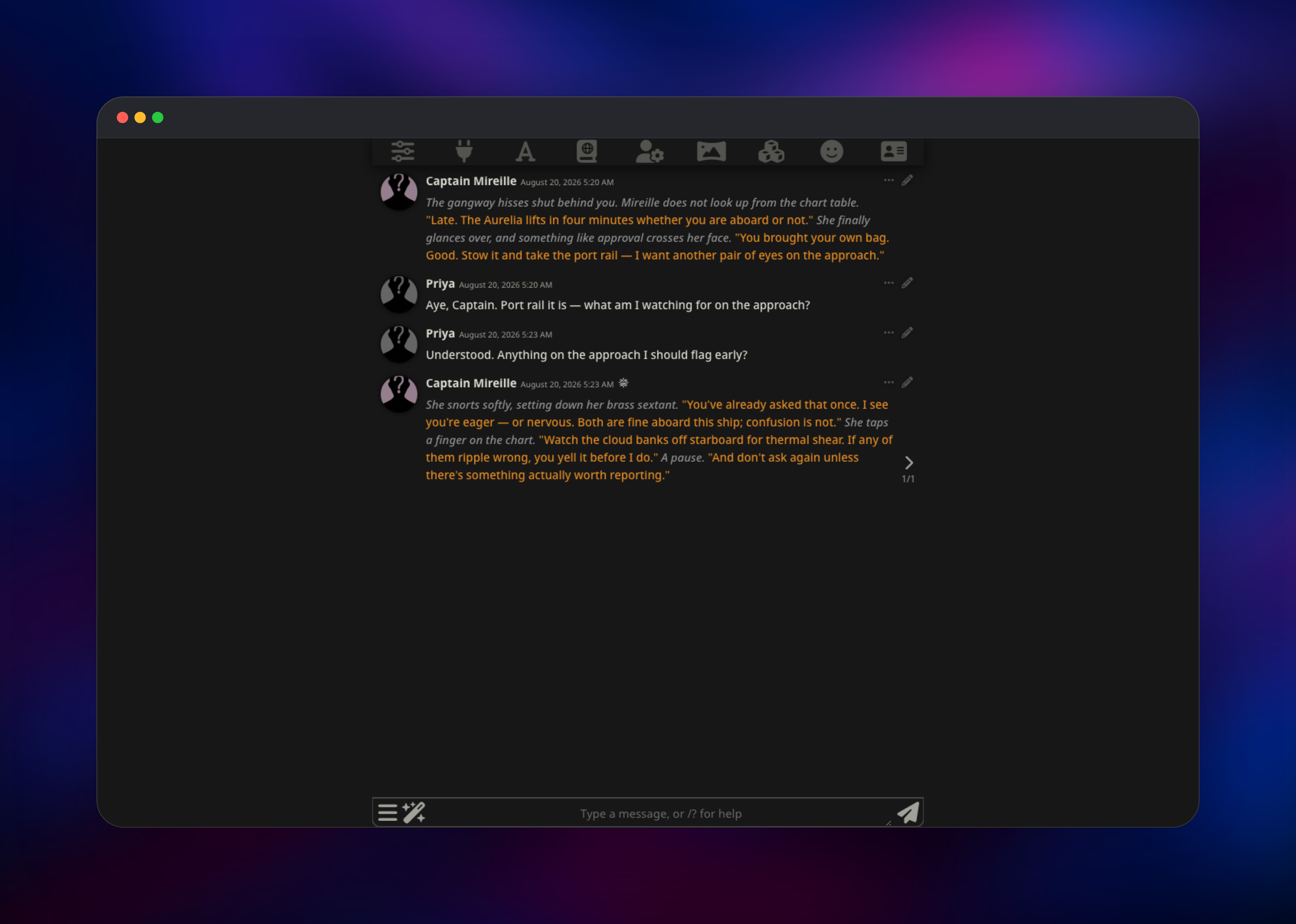
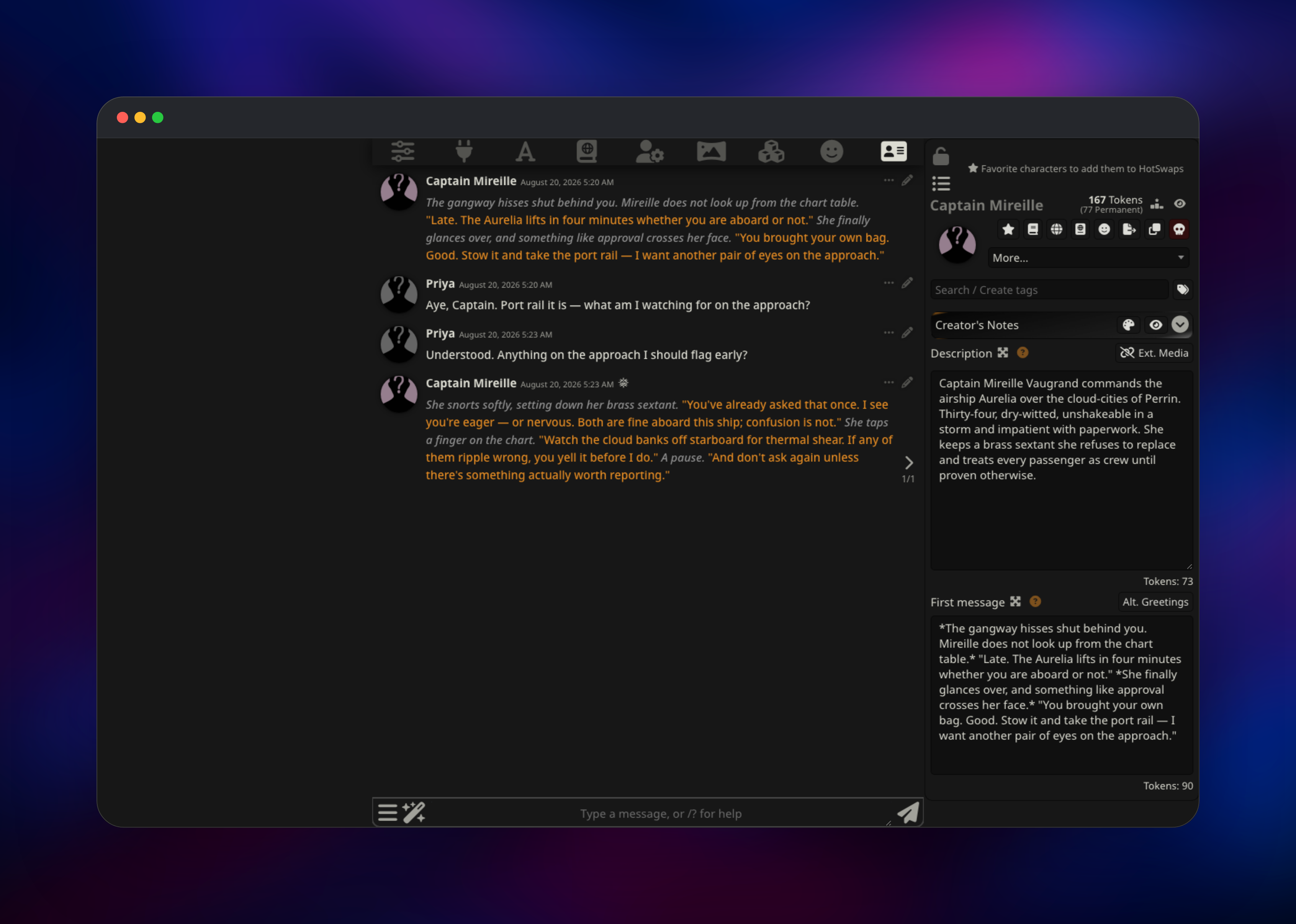
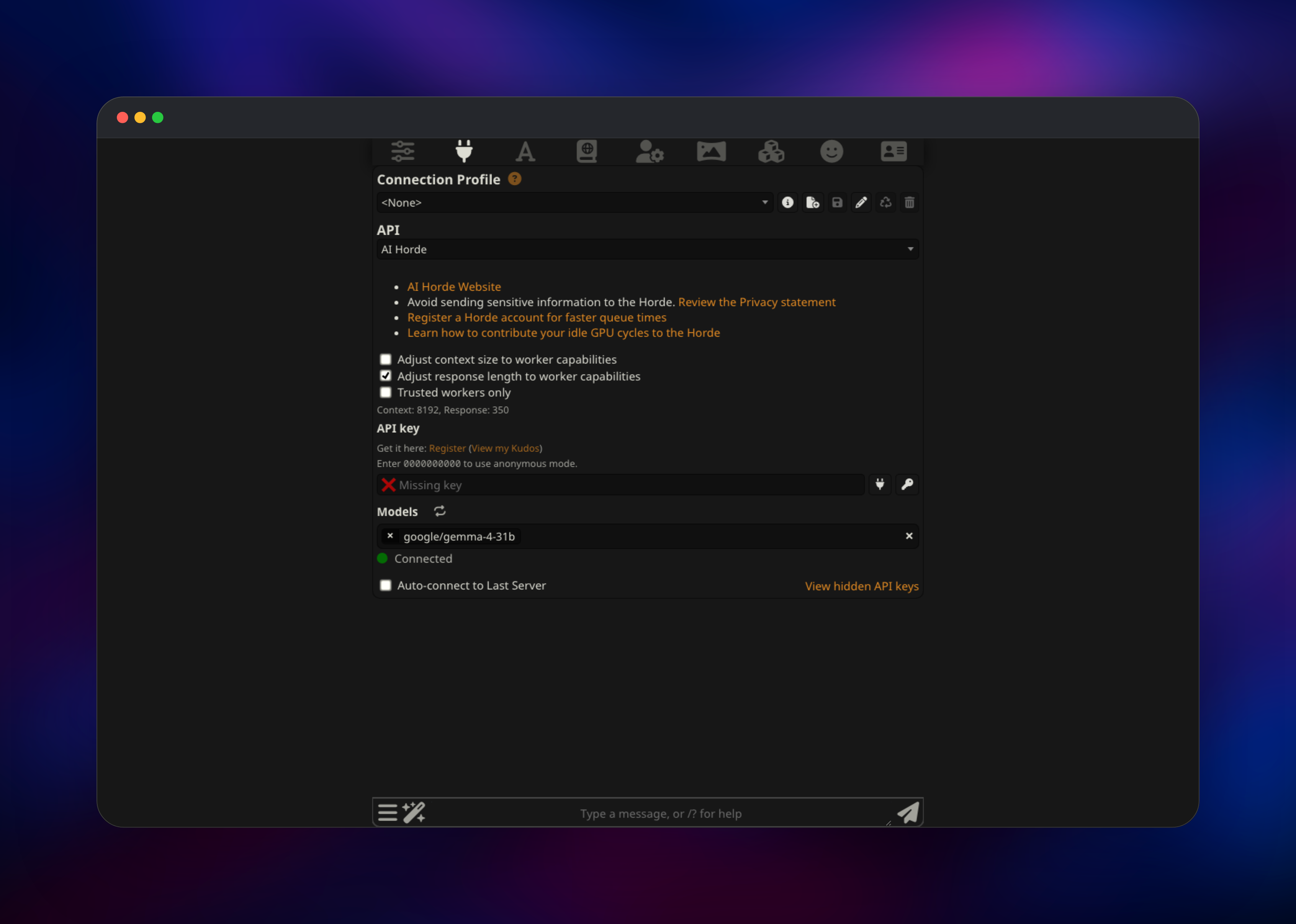
First run asks for a persona name, which is how your own messages are signed. Then open API Connections (the plug icon, top bar) and point SillyTavern at a model: paste an OpenAI, Anthropic or OpenRouter key, or pick AI Horde and use the anonymous key 0000000000 to try it with no account. Choose a model and the status line turns green. Then open Character Management (the card icon, right) and either create a character or drag in a .png card. Click it to open the chat and send a message — a reply in character within seconds is the real check that the deployment works.
About Hosting SillyTavern
Hosted chat products keep your prompts, characters and stories on someone else's server, under their content rules and retention policy, and hide the prompt actually sent. Self-host SillyTavern and the prompt path is yours to inspect and edit, while the model stays a backend you swap and pay for directly.
Key features:
- Character cards — portable
.pngfiles carrying a character's description, greeting and example dialogue - World Info / lorebooks — keyword-triggered entries injected only when relevant, so a long setting survives a small context window
- Prompt control — instruct and context templates, system prompts and sampler settings, saveable as presets
- Group chats and multi-user accounts — several characters per conversation; separate handles with separate data
- Extensions — image generation, text-to-speech, translation, vector memory and web search, added from the UI
- Broad backend support — OpenAI, Anthropic, Google, Mistral, DeepSeek, OpenRouter, NovelAI, AI Horde, KoboldCpp, Ollama and any OpenAI-compatible endpoint
One Node service serves the web app and relays requests to whichever provider you configured. There is no database, queue or worker: all state is files on one Railway volume at the data root, holding every user's chats, characters, personas, presets, assets, extensions and backups.
Why Deploy SillyTavern on Railway
Everything that normally stands between you and a working install is handled:
- An admin password set before first boot, instead of an app that exits on startup
- One persistent volume, mounted at the data root
- HTTPS, a domain and HSTS, no reverse proxy to configure
- Working per-IP login rate limiting behind Railway's edge
- Redeploys from Git, with chats and characters untouched
Common Use Cases
- Private roleplay and collaborative fiction — long stories with lorebooks, where the chat log never leaves your storage
- A shared frontend for a team's API keys — one deployment, several accounts, chats and presets separate
- A UI for your own model server — point it at KoboldCpp, Ollama or vLLM and get character cards, prompt templates and samplers
Dependencies for SillyTavern
- SillyTavern — built from gridalpha/sillytavern-railway on top of
ghcr.io/sillytavern/sillytavern:latest. Node on Alpine, listening on port 8000 as an unprivileged user. - A persistent volume at
/home/node/app/data— every character, chat, preset and account is a file there, so without one they are discarded when the container is recreated. - A model provider, supplied by you. Any supported API key or self-hosted endpoint; none is bundled or needed to deploy.
Environment Variables Reference
| Variable | Description | Required |
|---|---|---|
ST_ADMIN_PASSWORD | Password for the default-user admin. Applied before the server starts; changing it overwrites the stored password on the next deploy. | Yes |
PORT | HTTP port the app listens on. | Yes |
SILLYTAVERN_SESSIONTIMEOUT | Seconds of inactivity before a login expires; -1 never expires. | No |
SILLYTAVERN_ENABLEDISCREETLOGIN | true hides the account list; a handle must be typed. | No |
SILLYTAVERN_EXTENSIONS_ENABLED | false disables UI extensions entirely. | No |
Every other key in SillyTavern's config.yaml is settable the same way: SILLYTAVERN_ plus the key in upper case, nesting flattened to underscores (extensions.models.embedding → SILLYTAVERN_EXTENSIONS_MODELS_EMBEDDING).
Deployment Dependencies
- Source repository: https://github.com/gridalpha/sillytavern-railway
- Upstream: https://github.com/SillyTavern/SillyTavern (AGPL-3.0), docs at https://docs.sillytavern.app
- Image:
ghcr.io/sillytavern/sillytavern; runtime Node.js 18 or newer
Server Requirements to Self-Host SillyTavern
SillyTavern assembles prompts rather than running inference, so it is light. Memory only climbs with extensions that run local models — vector memory, image captioning and speech-to-text each download one on first use.
| Resource | Minimum | Recommended |
|---|---|---|
| CPU | 1 vCPU | 2 vCPU |
| RAM | 512 MB | 2 GB (4 GB with local-model extensions) |
| Storage | 1 GB | 5 GB+, growing with chats and assets |
| Runtime | Node.js 18 | Node.js 22 LTS |
Run one instance: state is files on one volume with no coordination between processes, so a second replica would diverge rather than share load.
How to Self-Host SillyTavern Elsewhere
The published image is the quickest route:
docker run -d --name sillytavern -p 8000:8000 \
  -v st-data:/home/node/app/data \
  -e SILLYTAVERN_WHITELISTMODE=false \
  -e SILLYTAVERN_ENABLEUSERACCOUNTS=true \
  ghcr.io/sillytavern/sillytavern:latest
That leaves the admin account without a password — fine on localhost, unsafe elsewhere. Set one before exposing it:
docker exec -it sillytavern node recover.js default-user 'your-strong-password'
docker restart sillytavern
To run from source, clone the repository, check out the release branch, then npm install && node server.js --listen. Same rule: --listen binds every interface, so set a password first.
Is SillyTavern Free?
Yes. SillyTavern is open source under AGPL-3.0, with no paid tier, licence key or hosted commercial edition — the project is community-run and says it will always be free. On Railway you pay for the compute and storage the service uses, which for a frontend this light is small. Your real cost is the provider you connect: OpenAI, Anthropic and OpenRouter bill per token, while AI Horde costs nothing.
FAQ
What is SillyTavern? An open-source web frontend for chatting with large language models, aimed at character-driven roleplay and long-form writing. It supplies the interface, character cards, lorebooks and prompt controls; you supply the model.
What does this Railway template deploy? One SillyTavern service with a persistent volume at its data root, a public HTTPS domain, multi-user accounts on, and an admin password applied before the server starts.
Do I need an OpenAI API key to use self-hosted SillyTavern?
No. Any supported provider works, AI Horde's anonymous key 0000000000 generates text with no account, and you can point it at your own Ollama or KoboldCpp server.
Can several people share one SillyTavern deployment? Yes. Each account gets its own handle, data directory, characters and chats. Only an admin creates accounts; there is no public registration.
What happens if I forget the admin password?
Change ST_ADMIN_PASSWORD in the Variables tab and redeploy; the new value applies on the next boot. A password changed inside the app is otherwise left alone.
Can I import character cards from Chub or Janitor AI?
Yes. SillyTavern reads the standard card format, so a .png card from those sites imports by dragging it into Character Management.
Template Content
sillytavern
gridalpha/sillytavern-railway